
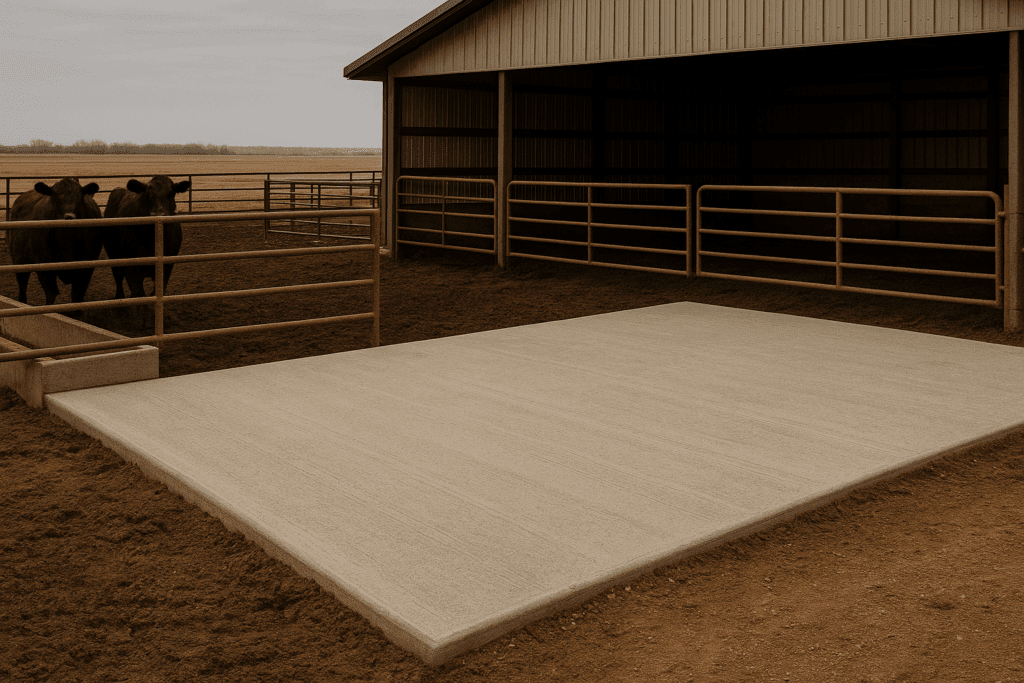
Why Concrete Is the Best Choice for Agricultural Buildings and Feedlot Pads in South Dakota
South Dakota agriculture depends on durability, efficiency, and long-term performance. From feedlots and livestock facilities to machine sheds, grain operations, barns, and large ag buildings, concrete has become the preferred foundation for nearly every modern farm. And for good reason—few materials can withstand South Dakota’s weather, heavy equipment, livestock demands, and constant freeze-thaw cycles the way concrete can.
Whether you’re constructing a new agricultural building, upgrading an existing feedlot, or improving drainage around your farm, choosing the right material is essential. In South Dakota, concrete is by far the best choice for strength, sanitation, maintenance, and overall lifespan.
In this guide, we’ll explain exactly why concrete outperforms other materials for ag use in South Dakota, what makes feedlot concrete so critical for livestock health, and how a professional ag concrete contractor ensures your farm pads and agricultural buildings last for decades.
South Dakota Agriculture Demands Tough, Weather-Resistant Materials
Anyone in agriculture understands the extremes:
- Frigid winters
- Heat waves
- Frozen ground
- Rapid freeze-thaw cycles
- Mud season
- Heavy rainfall
- High winds
- Long-term livestock traffic
- Heavy machinery and repeated loading
These environmental factors destroy weak surfaces like gravel, compacted dirt, or thin asphalt. Ruts form, mud develops, equipment sinks, livestock areas become unsanitary, and the entire site becomes inefficient and unsafe.
Concrete solves these problems better than any other material.
1. Concrete Provides Superior Durability Across South Dakota’s Climate
Durability is the number one reason farmers choose ag concrete.
Concrete withstands:
- Livestock weight and hoof pressure
- Skid steer traffic
- Manure loaders
- Semi trailers and tractors
- Freeze-thaw cycles
- Long-term wear
With the right mix design—including air entrainment for freeze-thaw durability—concrete remains stable even in the toughest winter conditions.
Where gravel or asphalt break down, concrete stays structurally sound for decades with minimal maintenance.
2. Feedlot Pads Require Concrete for Animal Health & Safety
Feedlot concrete is not just about convenience—it directly impacts livestock well-being.
High-quality feedlot concrete offers:
✔ Better Drainage
Standing water, mud, and manure create bacterial issues. A properly sloped concrete pad moves water away quickly.
✔ Cleaner Environment
Cleaner cattle = less disease risk, fewer hoof problems, and improved weight gain.
✔ Reduced Foot Rot and Hoof Damage
Stable, slip-resistant concrete surfaces dramatically reduce injuries.
✔ Lower Maintenance Costs
Gravel and dirt feedlots require constant grading, reshaping, and material replacement. Concrete eliminates those recurring expenses.
✔ Better Operational Efficiency
Feeding, cleaning, sorting, and loading become significantly faster and safer.
Because of these advantages, concrete feedlot pads are becoming the standard across South Dakota cattle and hog operations.
3. Concrete Handles Heavy Farm Equipment Without Failure
South Dakota farms rely on heavy equipment daily:
- Wheel loaders
- Skid steers
- Tractors
- Semis
- Grain trucks
- Feed wagons
- Bale processors
These machines exert immense weight and repeated stress, which destroy alternative surfaces.
Concrete’s compressive strength—especially high-PSI ag mixes—ensures:
- No rutting
- No sinking
- No washouts
- No grading or re-leveling
- Clean, consistent traction
For busy farming operations that can’t afford downtime, concrete is the most reliable long-term solution.
4. Concrete Improves Farm Efficiency and Workflow
Time is money on a farm. Efficient movement of livestock, equipment, and vehicles contributes directly to profitability.
Concrete improves:
- Feeding speed (skid loaders run smoother)
- Cleaning times (manure scrapes cleanly off concrete)
- Loading/unloading (stable surfaces for semis)
- Safety (reduced slips and falls)
- Traffic patterns (predictable, durable pathways)
Many South Dakota ag clients report 30–50% faster daily operations after installing concrete feedlot pads or new ag building floors.
5. Concrete Maximizes Sanitation and Biosecurity
In today’s agricultural world, sanitation is more important than ever. Diseases spread quickly on farms with dirt or gravel surfaces.
Concrete enables:
- Easier manure scraping
- Complete cleanouts
- Better wash-down capability
- Smooth, non-porous surfaces
- Controlled drainage
- Reduced mud and bacterial buildup
For hog barns, dairy operations, cattle feedlots, and poultry facilities, sanitation is a major advantage of choosing concrete.
6. Concrete Outlasts Every Other Farm Pad Material
Lifespan is where concrete truly shines.
Approximate lifespan comparisons:
| Material | Typical Lifespan | Maintenance Need |
|---|---|---|
| Dirt/Compacted Soil | Months–2 years | Constant repair |
| Gravel | 3–5 years | Frequent re-grading + replacement |
| Asphalt | 7–12 years | Cracks, softens, breaks under equipment |
| Concrete | 30–50+ years | Minimal maintenance |
Concrete remains strong, stable, and effective for decades—making it the most cost-effective option long term for South Dakota ag operations.
7. Concrete Handles Drainage and Water Management Better Than Any Other Surface
Poor drainage is one of the biggest challenges on feedlots and farmyards.
Concrete allows for:
- Custom slopes
- Managed runoff
- Controlled manure flow
- Integrated drain channels
- Prevention of standing water
- Rapid drying
This reduces:
- Mud
- Bacteria
- Erosion
- Structural damage
- Equipment wear and tear
For South Dakota’s wet springs and freeze-thaw cycles, drainage control is essential, and concrete performs far better than alternatives.
8. Concrete Is Fully Customizable for Agricultural Use
Ag concrete is not “one size fits all.” It can be tailored to any livestock operation or farm layout.
Customizations include:
- Heavy-duty high-PSI mixes
- Broom finishes for traction
- Sloped feed alleys
- Curbs and containment edges
- Integrated drainage channels
- Reinforcement for heavy loading
- Footing designs for buildings
- Monolithic pours
- Aprons, alleys, and rollback curbs
Whether it’s cattle, hogs, dairy, equipment storage, grain handling, or commodity buildings—ag concrete can be engineered to meet the exact demands of your operation.
9. Concrete Adds Value to Your Farm
Concrete is not just functional—it increases property value significantly.
Benefits include:
- Better resale potential
- Long-term asset life
- Reduced liability
- Improved operational efficiency
- Cleaner environment
- Professional appearance
For farms planning generational handoff, expansions, or business growth, concrete is a smart investment.
10. South Dakota Agricultural Concrete Requires a Contractor Who Understands Regional Conditions
Not every contractor understands agricultural needs—or South Dakota’s extreme climate.
Your ag concrete contractor must know:
- Cold-weather concrete placement
- Feedlot slope requirements
- High-traction finishing
- Heavy-load reinforcement
- Freeze-thaw mix design
- Proper curing for outdoor ag pads
- Drainage design for manure runoff
- Longevity requirements for livestock environments
WagCo has extensive experience with both agricultural concrete AND South Dakota environmental demands, making us one of the region’s leading ag concrete contractors.
Why South Dakota Farmers Choose WagCo for Ag Concrete & Feedlot Pads
WagCo provides:
✔ High-strength agricultural concrete mixes
✔ Professional feedlot pad construction
✔ Machine shed floors, aprons, alleys, and slabs
✔ Drainage and runoff design
✔ Freeze-thaw resistant concrete solutions
✔ Cold-weather placement expertise
✔ Fast, efficient scheduling
✔ Decades-long durability
We serve:
- Cattle operations
- Hog barns
- Dairy farms
- Grain facilities
- Livestock auctions
- Ranch yards
- Commodity buildings
- General ag infrastructure
If it involves concrete on a farm, WagCo builds it the right way.
Conclusion: Concrete Is the Smartest Long-Term Choice for South Dakota Agricultural Operations
From feedlot pads to equipment yards, livestock alleys, machine sheds, barns, and commodity buildings—concrete is the most durable, sanitary, and cost-effective material for South Dakota agriculture.
It outperforms gravel, dirt, and asphalt in every category:
- Strength
- Lifespan
- Sanitation
- Freeze-thaw durability
- Animal safety
- Drainage
- Efficiency
With the right contractor, agricultural concrete becomes a long-term asset that improves your operation for decades.
If you’re ready to upgrade your ag facility or build new farm infrastructure, WagCo provides the expertise, equipment, and regional knowledge to get the job done right.