Top Commercial Construction Trends in South Dakota for 2026
The commercial construction industry in South Dakota is entering one of its most transformative periods in recent years. As 2026 approaches, the state is experiencing rapid changes in technology, workforce expectations, business expansion, and building efficiency standards. From Sioux Falls and Rapid City to smaller rural communities, South Dakota businesses are planning smarter, building stronger, and investing in long-term infrastructure at a pace the state hasn’t seen in decades.
Understanding these emerging trends isn’t simply helpful — it’s essential for any business owner or developer preparing for a project in the coming year. The construction environment in 2026 will reward companies that plan ahead, choose the right materials, and partner with contractors who understand local conditions. Below is a look at the most influential SD construction trends shaping the future of commercial building across the state.
A New Era of Energy-Efficient, Cost-Saving Commercial Buildings
One of the biggest shifts moving into 2026 is the demand for more energy-efficient buildings. South Dakota’s climate is known for extremes — harsh winters, hot summers, and dramatic wind exposure — all of which drive up operating costs for businesses. Because of this, more companies are prioritizing high-performance insulation, advanced HVAC systems, tighter building envelopes, and construction methods that reduce energy loss.
What used to be considered “premium features” are now seen as long-term cost-saving necessities. Business owners want structures that will stay warmer in winter, cooler in summer, and cheaper to operate for the next 20 to 30 years. This emphasis on efficiency is reshaping design conversations right from the early planning stages.
Pre-Construction Planning Is Becoming the Most Important Phase
More than ever before, South Dakota companies are leaning heavily on pre-construction planning to make smarter financial decisions. With material prices fluctuating and project timelines becoming more sensitive to weather patterns and workforce availability, owners want clear cost models, accurate schedules, and more transparent forecasting.
Contractors are responding by using better digital modeling, more advanced estimating software, and stronger early-stage coordination with engineers and architects. Instead of guessing at budgets or relying on rough timelines, projects entering 2026 will benefit from data-driven planning that minimizes surprises, reduces change orders, and keeps builds on track.
Businesses that once viewed pre-construction as “optional” now see it as the most important step in preventing budget overruns and delays.
Rural and Small-Town Development Is Accelerating
While major cities like Sioux Falls and Rapid City continue to grow, a powerful trend heading into 2026 is the surge of commercial development in small towns and rural markets. South Dakota’s expanding industries — agriculture, manufacturing, tourism, healthcare, and logistics — are fueling new construction in communities that previously saw slow commercial expansion.
Machine shops, retail spaces, clinics, service centers, warehouses, and mixed-use buildings are being built in towns where demand has quietly been growing for years. Lower land costs, decentralized workforces, and improved infrastructure are all contributing to this shift. Contractors who can work efficiently in rural environments, understand local soils, and manage remote logistics will be in high demand for the foreseeable future.
Renovation and Adaptive Reuse Are More Popular Than Ground-Up New Builds
Another major trend in the 2026 construction forecast is the increased preference for renovations over brand-new construction. Many South Dakota businesses are choosing to modernize existing buildings instead of replacing them. With higher interest rates and longer lead times on certain materials, remodeling has become a practical, cost-efficient way to grow.
Older commercial properties — especially in cities like Mitchell, Brookings, Aberdeen, Pierre, Yankton, and Watertown — are being transformed into modern offices, restaurants, clinics, and service businesses. Adaptive reuse allows owners to maintain the character and structure of the building while completely upgrading finishes, mechanical systems, and layout.
This approach shortens the construction timeline, lowers the upfront investment, and avoids many of the permitting hurdles associated with major new developments.
Concrete and Structural Improvements Are at the Center of Commercial Expansion
Concrete demand continues to expand across the state, driven by both commercial and agricultural growth. Businesses are placing a higher value on durability, freeze-thaw resistance, and long-term performance — especially with South Dakota’s climate pushing poorly installed concrete to fail faster than ever.
Feedlots, parking lots, foundations, equipment yards, shop floors, retail pads, and warehousing spaces are all being built with higher-quality concrete mixes and better-engineered subgrades. Companies have learned from experience that cutting corners on concrete leads to costly repairs later.
As commercial and agricultural sectors grow simultaneously, concrete remains the backbone of South Dakota’s long-term infrastructure forecasts.
Labor Market Pressures Are Pushing More Efficient Building Methods
Workforce shortages remain one of the biggest challenges in South Dakota’s construction industry. Moving into 2026, contractors are finding new ways to work smarter by using prefabricated components, improving jobsite coordination, cross-training employees, and integrating technology that reduces manual labor.
This shift isn’t about replacing workers — it’s about maximizing the workforce that does exist. More efficient project sequencing, simplified building methods, and streamlined communication are becoming competitive advantages. Contractors who adapt will deliver stronger outcomes, while outdated processes will fall behind.
Steel and Pre-Engineered Metal Buildings Will Dominate New Commercial Builds
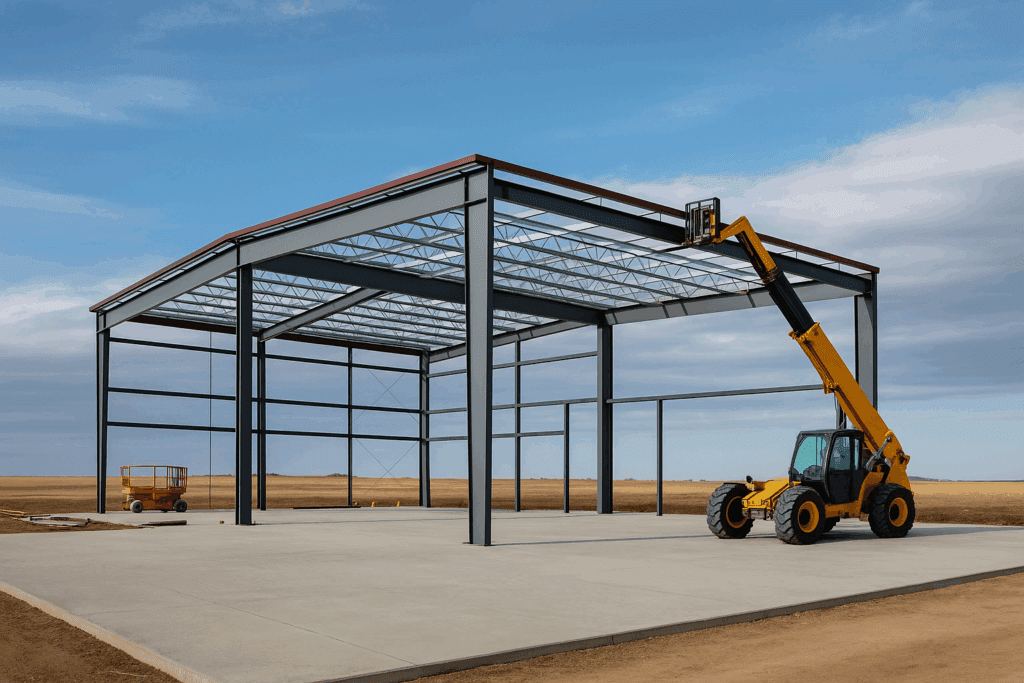
One of the clearest trends shaping commercial building in South Dakota is the rising popularity of steel and pre-engineered metal buildings (PEMBs). Businesses are choosing steel for its fast installation timeline, long-term durability, and cost efficiency.
Shops, warehouses, distribution centers, equipment storage buildings, manufacturing facilities, and agricultural structures are increasingly being designed around steel systems. With improved lead times and better customization options, PEMBs are positioned to become the preferred commercial building type for years to come.
Technology Is Quietly Transforming Construction Across the State
While South Dakota tends to adopt new technologies with practicality instead of hype, digital tools are undeniably becoming part of the construction process. Drones, remote jobsite monitoring, 3D design previews, cloud-based project communication, and laser-guided equipment all provide efficiency that wasn’t available even five years ago.
These tools reduce errors, speed up decision-making, and give business owners more transparency into their project. Technology won’t replace craftsmanship, but it will support it — and in 2026, the contractors who embrace it will deliver superior results.
Agricultural Construction Continues to Modernize Rapidly
Agriculture remains one of South Dakota’s largest and most important industries, and commercial construction tied to ag development is growing at record speed. Producers are investing more heavily in modern feedlot pads, new machine shops, grain systems, livestock buildings, and repair facilities.
This trend is driven by efficiency. Farmers want structures that reduce maintenance, last longer, support larger equipment, and improve daily operations. As a result, agricultural construction is merging with commercial construction methods more than ever before, making the ag sector a major contributor to statewide growth.
Conclusion: 2026 Will Be a Defining Year for South Dakota Construction
South Dakota’s commercial construction industry is entering a period of smarter planning, better materials, more durable builds, and rapidly increasing demand across both urban and rural markets. Businesses that understand these trends — and plan around them — will create facilities that operate efficiently, last longer, and provide stronger long-term value.
Whether it’s energy-efficient design, steel building expansion, adaptive reuse, rural development, or modernized agricultural infrastructure, the trends shaping 2026 all point toward one thing: South Dakota is building for the future.
For businesses preparing a project in the coming year, the smartest move is partnering with a contractor who understands these statewide changes and knows how to deliver results that last.
WagCo is ready to help South Dakota businesses navigate the 2026 construction landscape with clarity, craftsmanship, and true local expertise.