
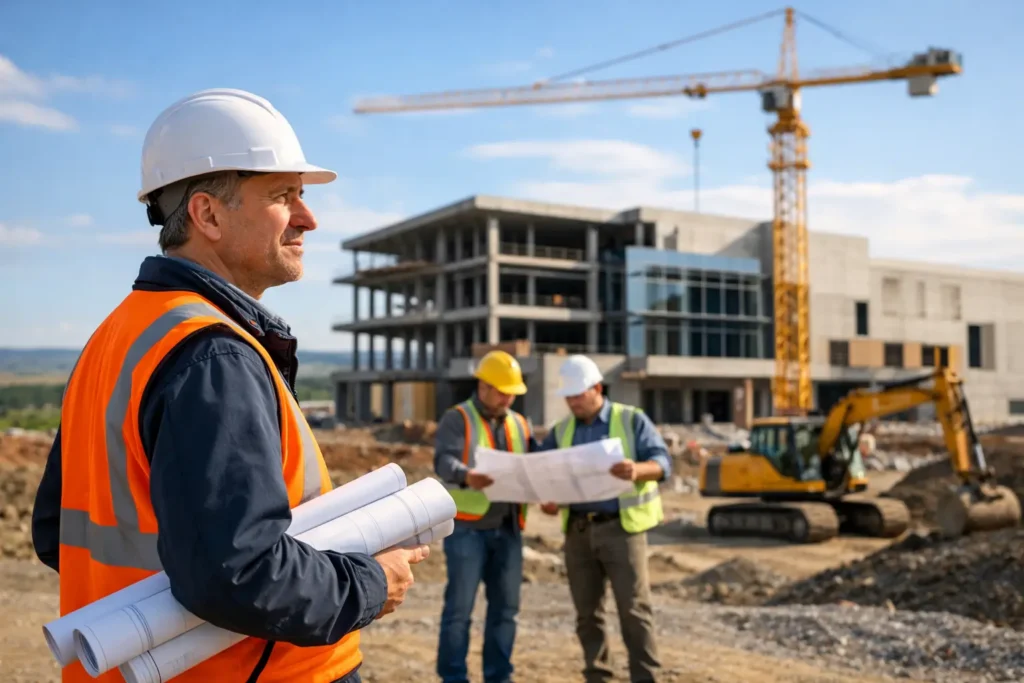
South Dakota Commercial General Contractor
A commercial project in western South Dakota can get off track before the first footing is poured. The problem usually is not one big issue. It is a string of small misses – incomplete scope review, unclear site conditions, permit timing, long-lead materials, utility coordination, or a schedule built without enough room for weather and inspections. That is why choosing the right south dakota commercial general contractor matters early, not just once construction starts.
Owners, developers, and public agencies do not need a sales pitch. They need a contractor that can price the work realistically, coordinate the field, manage trade partners, and keep decisions moving. In this market, local knowledge is not a talking point. It affects schedule, budget, and how much rework a project absorbs before turnover.
What a South Dakota commercial general contractor should actually manage
A general contractor is responsible for more than putting labor on site. On a commercial or municipal job, the role is to bring structure to the entire delivery process. That starts with preconstruction and continues through closeout.
Before the job begins, that means reviewing drawings for constructability, identifying scope gaps, building a practical schedule, and flagging procurement risks. On many projects, the early value is in finding what is missing before it becomes a change order or delay. A good contractor should be able to tell an owner where the design is clear, where it is thin, and what decisions need to happen soon to protect the schedule.
Once work starts, the responsibility shifts to field control. That includes subcontractor coordination, site logistics, quality management, safety, inspections, and communication with the owner and design team. If the project includes self-performed work such as concrete or carpentry, that can tighten control over sequencing and reduce dependence on outside availability for critical scopes.
Closeout matters too. Punch list management, commissioning support, final documentation, and turnover planning are often treated like an afterthought. They should not be. For owners, a delayed closeout can affect occupancy, operations, and financing just as much as a delayed start.
Why local experience matters in western South Dakota
Commercial construction in Rapid City, Box Elder, the Black Hills, and surrounding areas has its own pace and constraints. A contractor working here needs to understand local permitting paths, inspection expectations, subcontractor availability, and weather impacts that can change field conditions quickly.
Soil conditions, frost timing, wind exposure, and access issues are not theoretical concerns. They affect excavation, concrete placement, steel erection, building envelope work, and site development. A schedule that might work on paper in another region can fail here if it is not built around actual local conditions.
Municipal and public-sector work adds another layer. Procurement requirements, public meeting timelines, wage compliance, submittal expectations, and documentation standards all require discipline. The right contractor knows how to move through those requirements without creating confusion for the owner.
That is where a relationship-driven local contractor has an advantage. The team often already understands who reviews permits, how utility coordination tends to unfold, and which scopes need early attention. That does not eliminate risk, but it helps reduce avoidable surprises.
Preconstruction is where projects are won or lost
If an owner brings in a contractor only after the drawings are complete and the bid date is set, there is less room to improve the outcome. Sometimes that delivery method is required, especially in public bidding. But when early involvement is possible, preconstruction usually pays for itself.
A capable contractor should help define realistic budgets, clarify scope boundaries, and identify items that need alternates, allowances, or owner decisions. That includes material lead times, phasing constraints, access concerns, and site work sequencing. It also includes reviewing whether the design matches the budget and schedule expectations.
Design-build can be especially useful when speed, coordination, or cost certainty matters. With design and construction aligned under one accountable team, owners can make decisions faster and reduce the back-and-forth that often slows traditional delivery. It is not the right fit for every project, especially where procurement rules dictate a different structure, but for many commercial buildings, shops, warehouses, and tenant improvements, it can reduce friction.
The key is simple. Preconstruction should produce decisions, not paperwork. If the process is not helping the owner understand cost, schedule, risk, and next steps, it is not doing its job.
Choosing a south dakota commercial general contractor for the building you actually need
Owners sometimes evaluate contractors too broadly. A firm may have a strong portfolio, but that does not mean it is the right fit for a municipal shop, a warehouse, an office renovation, or a structural concrete package. The better question is whether the contractor understands the specific building type, occupancy demands, and use case.
A public works facility has different priorities than a retail build-out. A warehouse demands practical site flow, slab performance, and envelope durability. A tenant improvement often lives or dies by phasing, trade coordination, and keeping adjacent operations moving. The contractor should be able to speak directly to those conditions, not just provide general assurances.
It also helps to look at how much control the contractor keeps over critical scopes. Self-performing concrete and carpentry can improve schedule reliability and field accountability, particularly when those trades affect the sequence for other crews. That does not automatically make one contractor better than another, but it can be a real advantage on projects where timing and quality control are tight.
Communication style matters just as much. Owners should know who is leading preconstruction, who is running the site, how updates will be handled, and how issues will be escalated. If that is vague at the proposal stage, it usually stays vague during the work.
What serious owners should ask before award
The best contractor interviews are not about polished talking points. They are about how the team thinks through risk. Ask how the contractor approaches incomplete drawings, long-lead materials, weather delays, permit timing, and subcontractor coordination. Ask what parts of the job they expect to be difficult.
You should also ask how they manage documentation, owner communication, and closeout. On public and municipal jobs, ask about experience with compliance reporting and procurement procedures. On occupied remodels and tenant improvements, ask how they plan around business continuity, access, noise, and safety separation.
Pay attention to whether the answers are specific. A dependable contractor can explain process, sequencing, and accountability in plain terms. If every answer sounds generic, the project may not get the level of attention it needs.
For many owners in western South Dakota, that is the value of working with a contractor like WagCo Construction. The point is not branding. The point is having one accountable team that can support planning, manage the field, and keep the project moving without losing sight of real operating needs.
The real standard is control
Commercial construction always involves moving parts. No contractor can promise a project without change, weather impact, or coordination pressure. What matters is control – control of scope review, schedule logic, trade sequencing, communication, and field execution.
That is what owners should expect from a commercial general contractor in South Dakota. Not polished language. Not vague assurances. A clear process, practical judgment, and a team that understands how buildings get delivered in this region.
If you are planning a commercial, municipal, or public-sector project in western South Dakota, start with the contractor conversation earlier than you think you need to. The right decisions made before mobilization are usually the ones that save the most time once the job is live.