
Commercial Concrete Phasing in South Dakota: How to Keep Your Business Open During Construction
Commercial concrete work doesn’t always happen on an empty lot with unlimited space. Most of the time, it happens where people are already working, shopping, visiting, and moving through the site every day. That’s where the real challenge begins: you need new concrete, but you can’t shut down the business to get it.
In South Dakota, this gets even more complicated because weather and winter maintenance are always part of the picture. A phased concrete project isn’t just about breaking work into smaller sections. It’s about protecting customer access, keeping deliveries moving, maintaining safe pedestrian routes, controlling dust and debris, and sequencing pours so curing and protection aren’t compromised.
When phasing is planned well, your project feels organized and predictable. When phasing is planned poorly, it feels like chaos—blocked entrances, confused customers, unsafe walkways, and schedule delays that create unnecessary tension for everyone involved.
This post walks through a practical, readable approach to commercial concrete phasing in South Dakota so you can upgrade your site without sacrificing operations.
What “phasing” actually means on a commercial concrete job
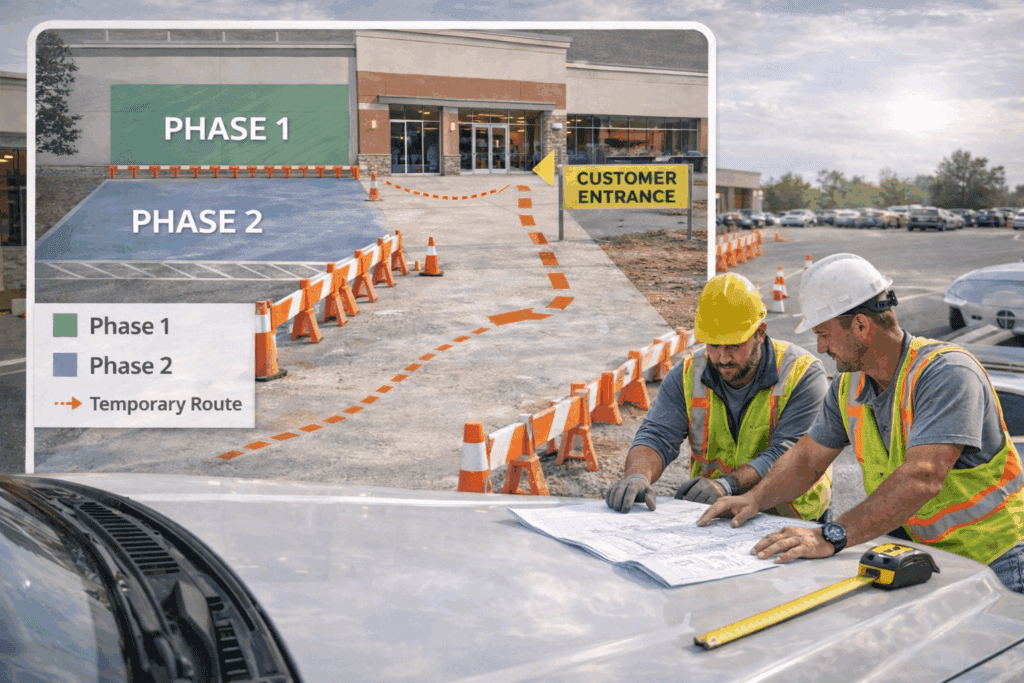
Phasing is a construction strategy where the project is divided into planned sections, and each section is built in a specific sequence to maintain access and continuity. On commercial concrete projects, phasing usually controls three things: where vehicles can drive, where people can walk, and how the contractor can work efficiently without constantly moving forms, materials, and equipment.
Phasing is often used for parking lot replacements, sidewalk and entry upgrades, ADA route corrections, curb ramp installs, loading area repairs, and occupied retail or multi-tenant sites. Instead of doing everything at once, the job is staged so parts of the site remain usable while work progresses.
Good phasing is not improvisation. It is an access plan, a safety plan, and a schedule plan working together.
Why South Dakota projects require more phasing discipline
South Dakota weather compresses schedules. When you’re working around rain, wind, temperature swings, and early freeze risk, the window for successful pours can be narrower than people expect. Phasing gives you control. It allows you to complete manageable sections while protecting quality and avoiding rushed pours just to “beat the weather.”
Winter also changes the stakes. If a site doesn’t have proper temporary access or safe pedestrian routes, snow and ice turn confusion into liability. A phased plan that looks fine in summer can become dangerous in winter if meltwater routes, snow stacking areas, and traction aren’t considered.
In other words, in South Dakota, phasing isn’t only about convenience. It’s about safety and durability.
The first step is mapping what must stay open
Before anyone cuts concrete or sets forms, phasing should start with a simple operational question: what must remain open every day for the business to function?
For many sites, it’s specific drive aisles, a main entrance, a delivery route, or ADA access from parking to the door. For medical, retail, and multi-tenant properties, it may also involve emergency access, accessible routes, and tenant signage.
A good contractor will identify these “non-negotiables” and build the phases around them. That might mean keeping the primary entrance open at all times while working around it, or it might mean temporarily shifting the primary entrance with clear signage and safe routing.
The biggest phasing failures happen when access is treated as an afterthought instead of the foundation of the schedule.
Vehicle access: keeping traffic moving without creating confusion
Parking and drive access are usually the center of a phasing plan. If customers can’t figure out how to enter, where to park, or how to exit safely, your project creates friction that can affect revenue and tenant satisfaction.
A strong phasing plan uses clear traffic patterns, not guesswork. Temporary entrances are marked. Drive aisles are defined. Construction zones are separated from customer flow. In many cases, temporary striping, cones, barricades, or signage are necessary to prevent drivers from entering active work areas.
Phasing also needs to consider turning radii and truck movement. Delivery vehicles can’t always follow the same routes as passenger cars. If you block the wrong lane or tighten a turn too much, you create daily operational problems.
For South Dakota sites with snow, it’s also important to plan where snow will be piled during the project. If snow storage blocks temporary lanes, your phased plan collapses in the first storm.
Pedestrian routes and ADA access: a major liability zone
Sidewalk closures and temporary walk routes are where commercial sites get exposed to safety risk. A safe route needs to be obvious, stable, and protected from construction activity.
If the project affects accessible routes, phasing should include a plan to maintain ADA access or provide an alternative compliant route when possible. Temporary routes should avoid loose gravel, sudden elevation changes, or narrow paths that create hazards.
In South Dakota, winter conditions make this even more important. A temporary route that is safe when dry can become dangerous when icy. A good phasing plan considers traction, drainage, and snow clearing responsibilities for temporary routes.
Owners should not accept “people can just walk around.” Clear routing is part of professional commercial work.
Sequencing concrete pours so you don’t trap yourself
One of the most common phasing mistakes is pouring concrete in a sequence that blocks the next step.
Concrete needs cure time. That means you can’t just pour “whatever is open” and then expect access to remain. If a contractor pours a section that becomes the only drive lane or blocks the only entrance while it cures, the business is forced into a shutdown.
Smart sequencing keeps at least one functional route open while poured sections cure. It also accounts for the fact that some areas take longer to reopen than others. Heavy-use areas, ramps, and certain finishes may require additional time or protection.
This is also where real experience shows. A contractor who understands occupied commercial work will plan pours around your highest-traffic periods and your operational rhythm.
Scheduling around business hours: nights, weekends, and downtime windows
Some commercial sites can tolerate daytime disruption. Others can’t. Phasing is often combined with off-hours work to keep peak time traffic flowing.
Retail sites may prefer early morning or evening transitions. Medical sites may need predictable access during clinic hours. Industrial and warehouse facilities may need uninterrupted delivery schedules.
A phased plan should include clear timing for when routes will change, when sections will be closed, and how long closures will last. Sudden changes without warning are what frustrate customers and tenants most.
The best projects communicate schedule changes before they happen and keep the site visually organized so people trust the process.
Safety barriers, signage, and “making it obvious”
The most readable way to think about phasing is this: the site should tell people what to do without them having to guess.
That means visible barriers between work zones and public zones, clean signage for entrances and parking, and clear directional arrows when traffic patterns shift. It also means keeping the site tidy. A chaotic work zone feels unsafe even if it technically meets requirements.
In South Dakota, wind and weather can move cones and signage. Good projects use durable barricades and consistent placement so the plan doesn’t fall apart overnight.
If you’re the owner, request a simple site map showing the phases and the temporary traffic routes. It doesn’t have to be fancy. It just needs to be clear.
Minimizing disruption: dust, noise, access to doors, and tenant satisfaction
Commercial phasing isn’t only about concrete placement. It’s about how the project feels to the people using the site.
Dust control matters, especially near entrances. Noise planning matters if you’re working near offices, clinics, or retail operations. Door access matters because blocked entryways cause immediate frustration. Even small things like where crews park and stage materials can affect how customers perceive your business during construction.
A contractor who manages these details well protects your brand while improving your property.
The budget benefit of good phasing
Owners sometimes worry that phasing will increase cost. It can add complexity. But bad phasing costs more.
Poor phasing causes rework, schedule delays, rushed pours, and change orders. It also creates operational costs for the business: lost parking, lost customers, tenant complaints, and safety risk.
A clear phased plan often reduces surprises and makes pricing more accurate because the contractor isn’t guessing how access will be handled. You’re buying a plan, not just concrete.
What to ask for before approving a phased commercial concrete project
If you want a clean project with minimal disruption, ask for these items upfront.
Ask for a simple phasing map or written breakdown of phases.
Ask how vehicle access will be maintained and how customers will be directed.
Ask how pedestrian and ADA routes will be handled during each phase.
Ask how long each phase is expected to be closed and when it will reopen.
Ask how schedule changes will be communicated.
Ask how winter weather will be managed if the project runs into colder months.
These questions don’t slow the project down. They prevent chaos later.
The bottom line: phasing is how commercial concrete gets done without shutting down
In South Dakota, the best commercial concrete work isn’t only about pouring straight lines and smooth finishes. It’s about sequencing the work so your property stays functional, safe, and accessible while the improvements happen.
If you’re planning a parking lot replacement, sidewalk upgrades, ADA route corrections, or any occupied-site concrete work, WagCo Construction can create a phased plan that keeps your business open, minimizes disruption, and delivers long-term durability—without turning your site into a daily headache.