
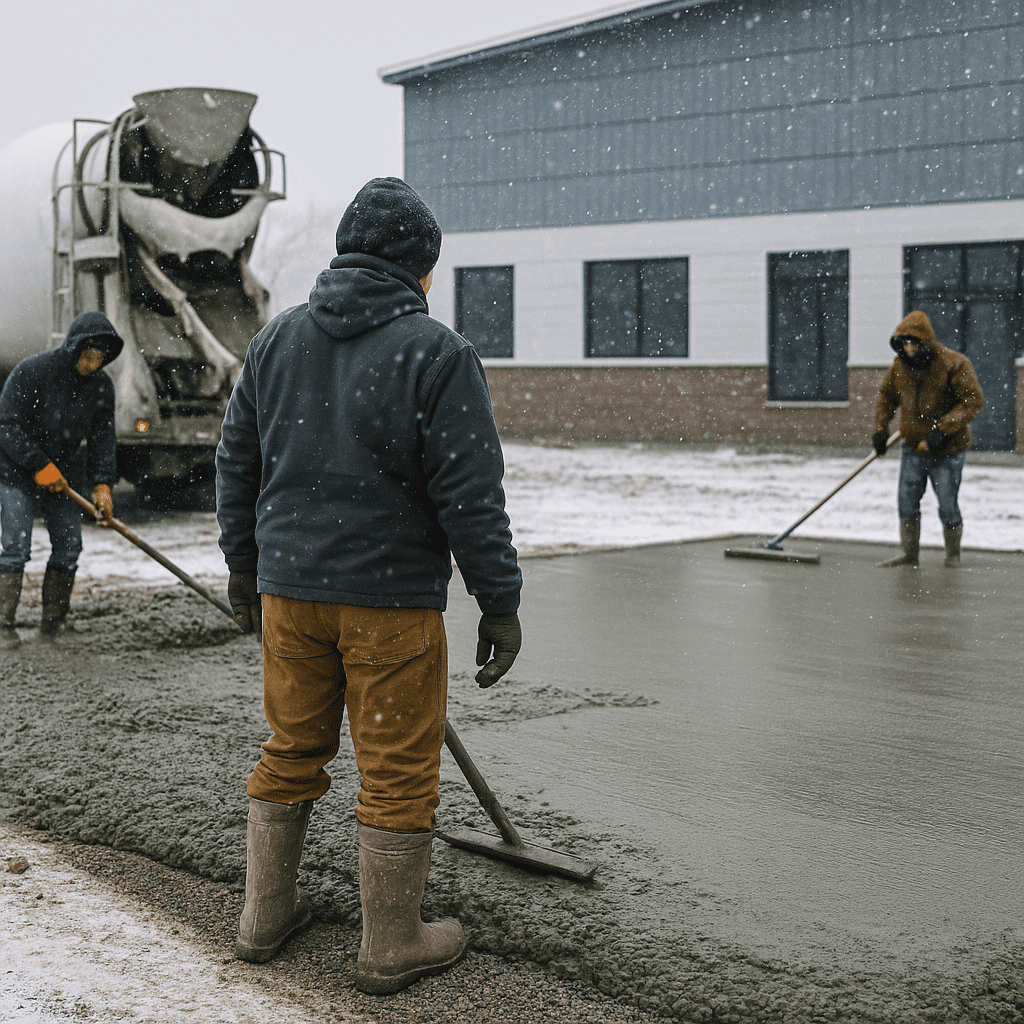
Concrete in Cold Climates: What South Dakota Businesses Need to Know Before Pouring
Concrete behaves differently in South Dakota than it does in almost any other region of the country. With long winters, sudden temperature swings, deep freezes, and one of the harshest freeze-thaw cycles in the Midwest, it’s no surprise that concrete poured incorrectly in cold weather can crack, scale, or fail long before its expected lifespan.
Whether you’re pouring a commercial slab, industrial pad, agricultural foundation, or structural concrete for a new building, understanding how cold weather impacts concrete is essential for durability and long-term performance. South Dakota businesses planning a fall, winter, or early-spring project need to be especially cautious—cold climate concreting is not something any contractor can “wing.”
This guide breaks down everything South Dakota business owners need to know before pouring concrete in cold weather, including how freeze-thaw cycles impact performance, what mix designs work best, and how professional contractors protect concrete from early-age freezing.
Why Cold Weather Concreting Is Different in South Dakota
Concrete cures by hydration, a chemical reaction that requires both moisture and heat. When temperatures fall below 50°F, hydration slows dramatically. Below 32°F, water inside the concrete freezes and expands, permanently damaging the material before it reaches strength.
This is why concrete cold-weather precautions are not optional in South Dakota—they are required for structural integrity.
Cold weather affects concrete by:
- Extending set and cure times
- Reducing final strength when not protected
- Increasing risk of early-age freezing
- Causing surface scaling and spalling
- Making finishing more difficult and unpredictable
- Exposing slabs to the freeze-thaw cycle before they are ready
In a climate where temperatures can swing 40 degrees within a single day, understanding these risks is critical.
The Freeze-Thaw Cycle: The Main Threat to South Dakota Concrete
If there’s one factor that destroys improperly poured concrete in cold climates, it’s the freeze-thaw cycle. Throughout South Dakota’s winters, moisture inside concrete repeatedly freezes and expands, then thaws and contracts. That expansion causes internal microcracking that worsens with each cycle, eventually leading to:
- Cracks
- Surface scaling
- Popouts
- Delamination
- Structural weakening
This damage is irreversible. You can seal concrete after it’s cured, but you cannot repair internal freeze damage.
Because of this, South Dakota concrete pours—especially late fall through early spring—must account for freeze-thaw durability through proper mix design, air entrainment, curing methods, and temperature control.
When Can You Pour Concrete in South Dakota?
Concrete can be poured safely in cold weather as long as the right methods are used. The American Concrete Institute (ACI) defines “cold weather concreting” as any time:
✔ Air temperature is below 40°F for more than 24 hours,
or
✔ Temperatures fall below 50°F and continue dropping.
In South Dakota, this period often spans from October through April.
Contractors can still pour successfully during these months—but only if they implement the proper cold-weather protection plan.
Choosing the Right Concrete Mix for Cold Weather
Not all concrete mixes are suitable for South Dakota’s climate. For outdoor slabs, structural concrete, and commercial applications, contractors make several adjustments to improve freeze-thaw resistance and early strength gain.
1. Air-Entrained Concrete (Non-negotiable in cold regions)
Tiny air bubbles provide relief for expanding water during freezing, preventing internal pressure buildup.
2. Accelerators (To speed up set time)
Helps concrete achieve critical early strength before temperatures drop.
3. Warmed or Heated Mixing Water
Raises internal temperatures during the first hours of hydration.
4. Higher Cement Content
More cement generates more internal heat—ideal for cold climates.
5. Low Water-Cement Ratio
Prevents porous, weak concrete that is vulnerable to freeze-thaw cycles.
A contractor unfamiliar with South Dakota’s climate may skip one or more of these steps—and that’s when problems happen.
Ground Preparation: A Critical Step Often Overlooked
Concrete is only as strong as the subgrade beneath it.
In cold weather, the ground itself poses a risk. Frozen soil, frost pockets, or saturated base material can shift dramatically once thawed. If concrete is poured on compromised ground, cracks and slab movement are almost guaranteed.
Professional cold-weather preparation includes:
- Removing frost from the subgrade
- Avoiding pours on frozen or icy soil
- Using ground heaters when necessary
- Compacting base material properly
- Installing moisture-controlled aggregate
South Dakota soil conditions change quickly in winter—experienced contractors know how to evaluate the ground before placing a single yard of concrete.
How Professional Contractors Protect Concrete in Cold Weather
What separates a poor cold-weather pour from a successful one is temperature control. Concrete must maintain a safe internal temperature long enough to reach early-age strength (usually 500 psi). If freezing occurs before then, the concrete is permanently damaged.
Here’s how professional contractors prevent that:
1. Insulating and Thermal Blankets
Placed immediately after finishing to trap heat and maintain hydration.
2. Heated Enclosures or Temporary Tents
Creates a controlled environment for large pours or structural components.
3. Ground Heaters
Prevents frost from forming below the slab and stabilizes the subgrade.
4. Accelerated Mixes
Reduces exposure time and helps achieve strength faster.
5. Temperature Monitoring
Sensors ensure the concrete never drops to freezing during the first 72 hours.
These methods allow high-quality concrete pours even during South Dakota’s coldest months—but the crew must be trained and experienced.
The First 72 Hours: Why They Determine Success or Failure
Concrete in cold weather is extremely vulnerable during the early stages of curing. The first 72 hours determine whether the concrete will last decades—or fail after just one or two seasons.
If concrete freezes too soon:
- Hydration stops
- Strength never develops
- Cracks form internally
- Freeze-thaw deterioration accelerates
- The slab may require complete replacement
This is why contractors must monitor temperature, insulation, wind exposure, overnight lows, and mix design closely. Businesses should choose contractors who treat cold-weather pours with precision, not guesswork.
Common Mistakes South Dakota Businesses Make When Pouring in Cold Weather
Even with the best intentions, businesses often make decisions that compromise their concrete project. The most common mistakes include:
- Trying to “squeeze in” a pour right before winter storms
- Hiring contractors without cold-weather experience
- Not budgeting for winter protection equipment
- Pouring on frozen ground
- Ignoring the impact of freeze-thaw cycles
- Choosing the cheapest bid without understanding the risks
Cold-weather concrete requires experience, equipment, and planning—not shortcuts.
How Much Extra Does Cold-Weather Concreting Cost?
Cold-weather pours typically cost slightly more than warm-weather projects due to:
- Heating blankets
- Enclosures
- Additional labor
- Accelerators or special admixtures
- Temp monitoring equipment
- Ground heating if required
However, the cost of failing to protect concrete correctly is far higher. Replacing a commercial slab, driveway, or foundation is exponentially more expensive than doing it correctly the first time.
The most cost-effective solution is hiring a contractor who knows how to pour concrete the right way in South Dakota’s climate.
How South Dakota Businesses Can Prepare for a Successful Winter Concrete Project
Planning is everything. The earlier a contractor is involved, the better the project outcomes will be—especially in winter. South Dakota weather requires strategies, contingency plans, and climate-specific expertise.
Before hiring a contractor, South Dakota businesses should ask:
- What is your experience with concrete cold weather placements?
- How do you protect concrete from freezing?
- What mix designs do you recommend for freeze-thaw durability?
- Will you monitor concrete temperatures after placement?
- What is your plan for subgrade and soil protection?
- Do you use air-entrained concrete for outdoor slabs?
If a contractor hesitates on any of these questions, they are not the right partner for cold-weather concreting.
Conclusion: Cold-Weather Concrete in South Dakota Requires Proven Expertise
Pouring concrete in a cold climate is not something any contractor can do properly without experience, planning, and the right systems in place. South Dakota’s severe winters, freeze-thaw cycles, and rapid temperature changes make cold-weather concreting a highly specialized process.
When executed correctly—with the right mix, proper ground preparation, controlled curing temperatures, and professional oversight—cold-weather concrete can be just as durable as concrete poured in ideal conditions.
But when done incorrectly, it can fail in a matter of months.
Businesses that prioritize expertise, cold-weather knowledge, and proven construction practices will protect their investment and ensure their concrete stands the test of South Dakota’s climate for decades.