South Dakota Soil Conditions: How They Impact Commercial Concrete Foundations
When South Dakota businesses begin planning a new commercial building, warehouse, shop, or agricultural facility, one of the most important factors often goes unnoticed—the soil beneath the foundation. While the concrete slab, footings, and structure get most of the attention, the soil is what ultimately determines whether a foundation remains stable for decades or begins to crack, shift, or fail.
South Dakota’s soil types vary dramatically from region to region. The state includes clay-heavy areas, sandy soils, loam, glacial till, and moisture-sensitive clays that expand and contract with the seasons. These differences make soil conditions one of the most critical elements in designing a durable commercial foundation.
In this guide, we break down the major South Dakota soil types, how they affect commercial concrete foundations, and why partnering with an experienced general contractor is essential to preventing costly foundation issues.
Why Soil Matters So Much in South Dakota Commercial Construction
Concrete doesn’t fail on its own.
Foundations almost always crack, settle, or heave because the soil underneath isn’t properly evaluated or prepared.
Poor soil preparation can lead to:
- Uneven settlement
- Frost heave
- Cracks in slabs and footings
- Water intrusion
- Building movement
- Leaning columns
- Slab curling
- Structural instability
A commercial foundation must be engineered to match the soil, not the other way around. In a climate like South Dakota, this is even more important because seasonal freeze-thaw cycles can rapidly accelerate soil movement.
Understanding South Dakota Soil Types
South Dakota has a diverse geological makeup. Soil conditions differ greatly between the east river and west river regions, and even from one mile to the next.
Here are the major soil types that affect commercial construction.
1. Clay Soils (Common in Eastern South Dakota)
Clay-heavy soils are extremely common in the eastern part of the state—Sioux Falls, Brookings, Watertown, Mitchell, Yankton, and surrounding areas.
Clay poses several foundation challenges:
- Expands when wet
- Shrinks when dry
- Causes slab movement
- Creates pressure against foundation walls
- Extreme sensitivity to freeze-thaw
This expansion and contraction cycle is known as soil swell, and if not accounted for, it leads to foundation cracks, uneven floors, and door/window misalignment.
2. Sandy Soils (Central and Western SD)
Areas around Pierre, Chamberlain, Winner, Rapid City, and parts of the Black Hills region contain sandier soils.
Advantages of sandy soils:
- Drain water quickly
- Less swelling and shrinking
- Lower frost heave risk
Challenges:
- Poor load-bearing capacity
- High risk of shifting if unconfined
- Requires compaction or soil stabilization
Without proper base material, sandy soils can wash out or cause slab settlement, especially under heavy commercial loads.
3. Loam and Glacial Till
Much of South Dakota includes loamy soils—balanced proportions of sand, silt, and clay—and glacial till.
Benefits:
- Strong load-bearing capacity
- Lower shrink-swell compared to clay
Challenges:
- Can retain moisture
- May become unstable during freeze-thaw
- Needs uniform compaction
These soils are typically good for commercial construction but still need proper evaluation.
4. Moisture-Sensitive Expansive Clays
Some pockets of South Dakota, especially east river, contain expansive clays similar to gumbo soils.
These soils:
- Swell dramatically when exposed to water
- Heave during freezing
- Contract and create voids when dry
Expansive clays are one of the most common causes of:
- Foundation cracks
- Sidewalk buckling
- Floor heave
- Structural movement
They require engineered solutions to prevent long-term damage.
How South Dakota Weather Makes Soil Issues Worse
South Dakota experiences one of the harshest climates in the Midwest:
- Temperature swings of 40+ degrees
- Deep freezes
- Heavy snowfall followed by thaws
- Spring saturation
- High winds leading to erosion
- Summer drought cycles
These conditions affect soil stability in several ways:
Freeze-Thaw Cycles
Water inside soil freezes and expands, causing soil layers to push upward—a process called frost heave.
Deep Frost Penetration
Foundations must be set below frost depth (often 42″–54″ depending on region) to avoid vertical movement.
Rapid Moisture Fluctuations
Clay soils swell during spring rains and shrink during summer drought, putting constant stress on foundations.
Surface Water Drainage
Poor grading or inadequate runoff increases soil saturation, weakening its load-bearing capacity.
This is why South Dakota foundations cannot be designed using cookie-cutter approaches—they must match the local soil and climate conditions.
How Soil Conditions Impact Commercial Concrete Foundations
Depending on the soil type, several issues can arise if the foundation isn’t engineered properly.
1. Settlement (Sinking Foundation)
Soft, loose, or poorly compacted soil causes:
- Floors to sag
- Walls to crack
- Doors to jam
- Uneven surfaces
- Trip hazards
Commercial buildings with heavy loads (racking, machinery, equipment) are especially vulnerable.
2. Frost Heave
In areas with clay or moisture-sensitive soils, frost heave can:
- Lift slabs unevenly
- Crack foundations
- Pull footings apart
- Damage plumbing lines
Heaving is a major risk in eastern South Dakota.
3. Heaving from Expansive Clay
Even without freezing, expansive soils can lift slabs by several inches when saturated.
Symptoms:
- Bowl-shaped slabs
- Cracks around columns
- Separation around building edges
This damage is extremely costly to repair.
4. Soil Washout / Erosion
Sandy areas or poorly drained sites suffer from:
- Voids forming under slabs
- Sunken sidewalks
- Cracked loading areas
- Water channeling beneath footings
Proper drainage and base preparation prevent this.
5. Structural Stress and Movement
When foundations shift due to soil movement, the entire building is affected:
- Roofing misalignment
- Structural steel shifts
- Wall panels separate
- Doors and windows stop functioning
- Insulation and vapor barriers fail
Ignoring soil conditions compromises the building’s long-term performance.
How Professional Contractors Protect Foundations in South Dakota
A skilled general contractor understands South Dakota’s soil and incorporates engineering solutions to prevent future problems.
Here’s what WagCo does during the foundation design and construction phase:
1. Soil Testing and Geotechnical Reports
Before pouring a foundation, a geotechnical engineer tests:
- Soil density
- Moisture content
- Load-bearing capacity
- Frost depth
- Shrink-swell potential
This report guides foundation design.
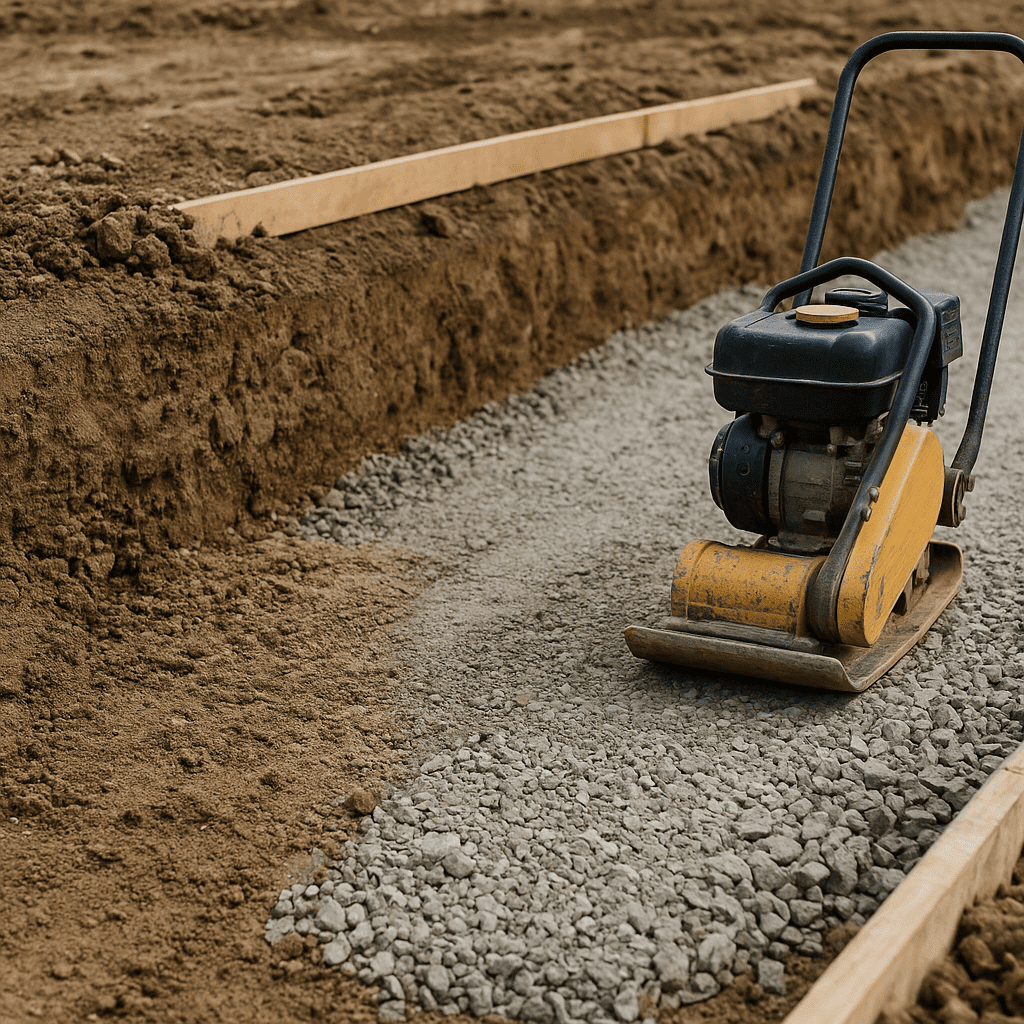
2. Proper Excavation and Base Preparation
Quality commercial foundations require:
- Removing unsuitable soil
- Bringing in high-quality base material
- Compacting in controlled layers
- Stabilizing soil where needed
Skipping this step leads to nearly all foundation failures.
3. Designing Foundations Based on Soil Type
WagCo builds foundations specifically suited for South Dakota soils:
- Deeper footings for frost-prone areas
- Reinforced slabs for expansive clays
- Vapor barriers for moisture-sensitive soils
- Engineered fill for sandy regions
- Monolithic pours for agricultural buildings
- Heavier reinforcement for industrial loads
There is no one-size-fits-all solution.
4. Proper Drainage and Water Management
Water is the enemy of foundation stability.
We ensure:
- Correct grading
- French drains (if needed)
- Sloped flatwork
- Controlled downspout discharge
- Drainage planes
- Subsurface water mitigation
This protects both the building and the soil beneath it.
5. Reinforcement and Concrete Quality
Quality reinforcement prevents issues caused by soil movement.
We use:
- High-grade rebar
- Proper spacing
- Correct doweling
- Commercial PSI mixes
- Air-entrained concrete
- Cold-weather protections when needed
Longevity always starts with proper materials.
Why Understanding Soil Conditions Matters to South Dakota Businesses
When business owners understand their soil, they make better decisions about:
- Building placement
- Foundation type
- Budget planning
- Long-term maintenance
- Contractor selection
Most importantly, it prevents being misled by low bids that skip critical soil preparation steps.
Why South Dakota Businesses Trust WagCo for Commercial Foundations
WagCo approaches every foundation as a long-term investment, not a quick pour.
Businesses choose us because we:
- Understand local soil conditions
- Work with top geotechnical engineers
- Prevent issues before they happen
- Use commercial-grade materials
- Build foundations designed for decades of performance
- Focus on quality over shortcuts
A great foundation protects your building for 50+ years. A bad one becomes a permanent headache.
Conclusion: Soil Is the Most Important Part of a Commercial Foundation in South Dakota
South Dakota’s diverse soil conditions—from expansive clay to sandy loam—mean that every foundation must be engineered with precision. The soil beneath your building determines:
- How long the structure lasts
- Whether cracks form
- How the building handles freeze-thaw cycles
- Whether floors stay level
- Whether the foundation stays stable over time
With the right general contractor, these risks disappear. With the wrong one, they become expensive long-term problems.
WagCo ensures your foundation is built for South Dakota—not for some generic building plan. And that difference saves businesses thousands over the life of their structure.